
03 · Tabcorp
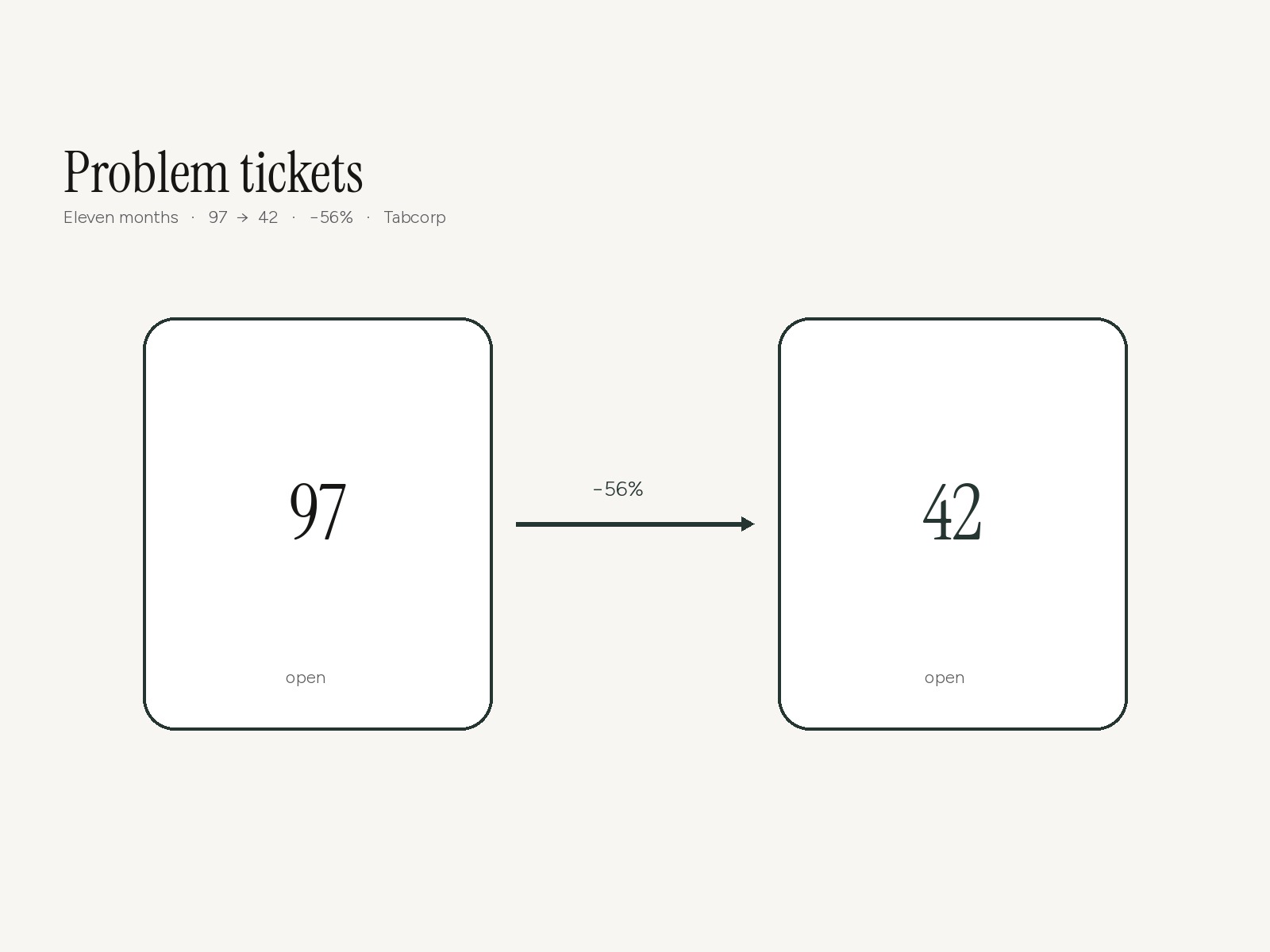
Ninety-seven problems down to forty-two
56% fewer problem tickets in eleven months, under multi-state wagering regulation.
−56%Problem tickets
How I ran it
The sequence on the night.
- 01
Count the noise. Ninety-seven open problem tickets — trend them, don't admire them.
- 02
Vendor risk acceptance where the data says the supplier is the weak link.
- 03
Chair the weekly CAB. Cut change lead time 27% so restore order is not an argument mid-outage.
- 04
Open a working channel with each state regulator. Reports move; nobody reads the incident in a newspaper first.
- 05
Eleven months later: ninety-seven becomes forty-two. 56% less archaeology.
Tabcorp is Australia’s largest wagering and gaming operator. When a platform incident hits, it is not only customers — it is state regulators, and they expect the report, the evidence, and the integrity of the system in writing.
I ran major incident and problem management across retail, online and application estates. The noisy part of the job was the problem backlog: ninety-seven open problem tickets. Over eleven months, through trend analysis and vendor risk acceptance, that number went to forty-two. A 56% reduction. Less archaeology, more prevention.
I also chaired the weekly operations change call as CAB lead, and cut the lead time required for changes by 27% — which is how you stop the argument, mid-outage, about which restore step is allowed. On the regulatory side I opened a direct channel with each state authority so reports moved, the backlog shrank, and nobody was discovering the incident in a newspaper first.
High-stakes operations is not only the night the network falls over. It is the year you spend making sure the next night is quieter.